Define carpentry responsibilities across construction sites, including drawings, setting out, power tools, material control and approval of changes.
This contract includes Complete assigned first-fix, second-fix or formwork carpentry. Set out work from controlled drawings and verified dimensions. Operate approved hand and power tools within competence. Preview before payment PDF and editable DOCX files after checkoutBuilt for UK employers
Looking for a Carpenter employment contract? This page takes you straight into the role-specific builder, with preview before payment and both PDF and DOCX files included after checkout.
Solicitor-approved framework Preview Before Payment £19.99 one-off PDF & editable Word Industry-specific clauses Secure Stripe payment
1,881Role-specific contract paths
GuidedHR Action journeys
40Industries supported
UK-focusedEmployment guidance
Secure payments by Stripe Data handling controlsUK employment contextClear product and advice boundaries
Legally validated and solicitor-approved contract framework
Reviewed for straightforward UK employer use
This page is maintained for UK employers creating carpenter contracts for construction. HRHeaven uses a legally validated and solicitor-approved self-service contract framework, with wording for role duties, confidentiality, notice, holiday, probation and practical workplace expectations. It does not replace individual legal advice for complex or disputed circumstances.
Last updated
19 June 2026
Content owner
HRHeaven employment documentation team
Review standard
UK employer template review, versioned clause logic and preview before payment
Free e-sign included
Send the completed contract for signature from your HRHeaven workspace without buying a separate signature tool.
Employer dashboard
Store contracts, track signature status, download signed PDFs, and keep employee documents in one secure dashboard.
Free branding
Add your company name, logo and brand colour so the contract looks like it came from your business.
What's included in your contract
Job description
Clear role overview and key responsibilities.
Probation period
Clear probation terms for the selected arrangement.
Role-specific duties
Maintained responsibilities, records and authority boundaries for the selected role.
Working hours
Standard and flexible working arrangements.
Holiday entitlement
Holiday terms explained for the selected arrangement.
Confidentiality
Client and company confidentiality.
Disciplinary process
Clear process and employee rights.
Notice periods
Notice terms explained for both parties.
You’ll receive your contract in both PDF & DOCX formats
Download a polished PDF ready to issue and an editable DOCX copy for future updates.
PDFReady to use
DOCXFully editable
Before you create it
Use this Carpenter contract with confidence
Practical checks to help an employer choose the right starting point and prepare the information the document needs.
When to use this contract
Deliver accurately fitted timber components, secure temporary and permanent carpentry, and deliver completed work protected and handed over.
Workplace context: Construction sites, project offices, client sites and approved work locations.
What makes this role different
Follow the Employer's documented arrangements covering site mobility. Follow the Employer's documented arrangements covering tools and work at height. Follow the Employer's documented arrangements covering drawings and tolerances. Follow the Employer's documented arrangements covering fire and structural interfaces. Follow the Employer's documented arrangements covering site rules.
Not a fit / obtain specialist advice
Recheck the role or obtain appropriate advice if the work would exceed these maintained authority boundaries: The carpenter may adjust fit within approved tolerances. Structural changes, fire-performance details, material substitution and unsafe access require site or design approval. Obtain approval before committing expenditure, changing contractual commitments or making regulated or staffing decisions outside the assigned role.
What to prepare before you issue it
the carpentry disciplines and project types within scope
the sites, travel area and reassignment expectations
the normal hours and weekend or shutdown work
the tools, machinery, PPE and vehicle arrangements
the reporting, inspection and snagging process
the authority for material substitutions and minor adjustments
Day-to-day operating brief
What Carpenter work looks like in practice
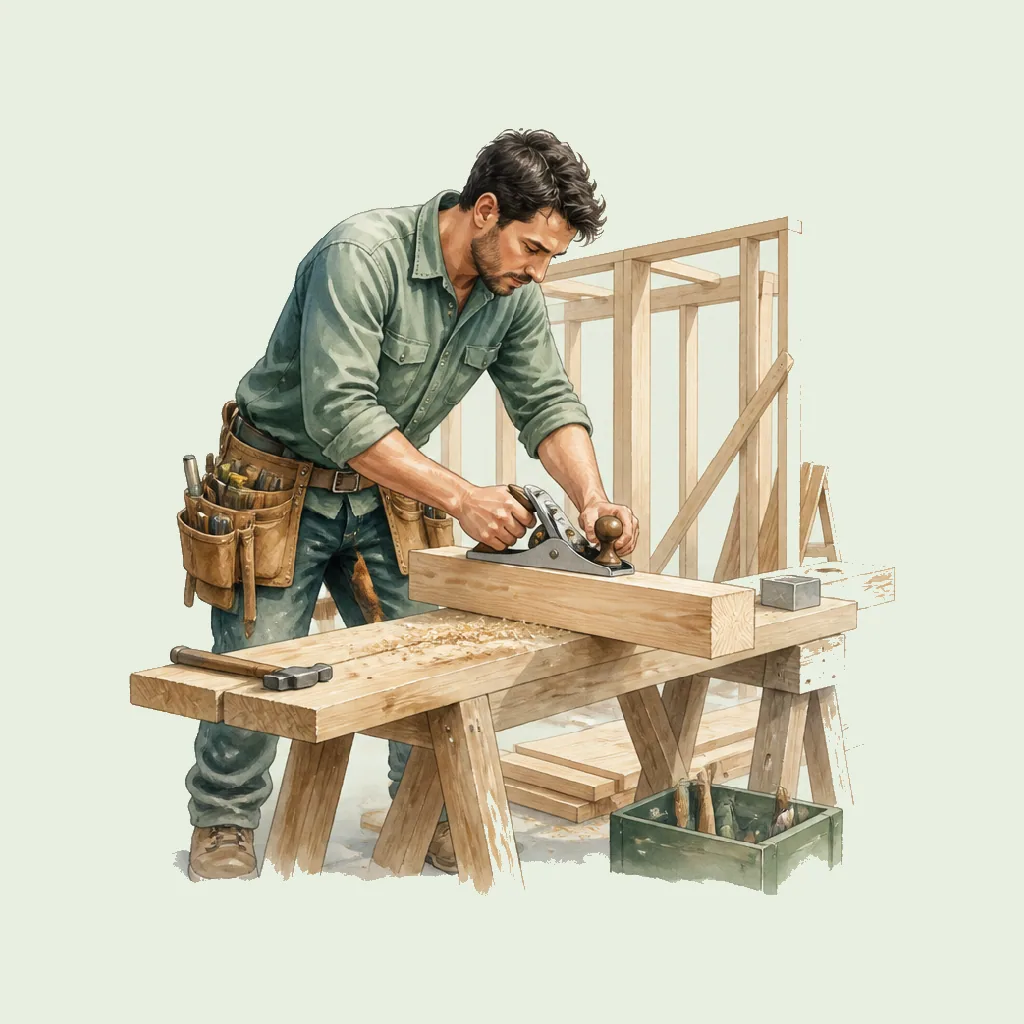
A site carpenter installs and repairs structural and finishing timber components from drawings and setting-out information. The contract should cover changing sites, portable tools, work at height, fire-stopping interfaces and responsibility for protecting completed work.
Responsibilities reflected in the contract
Complete assigned first-fix, second-fix or formwork carpentry.
Set out work from controlled drawings and verified dimensions.
Operate approved hand and power tools within competence.
Check timber and components against specification before installation.
Protect finished work and maintain an orderly work area.
Report drawing conflicts, defects and unsafe equipment promptly.
A realistic working scenario
A door lining opening differs from the schedule and nearby fire-stopping is incomplete. The carpenter records the condition, avoids trimming away specified material and obtains the supervisor's approved detail before fitting.
Outputs to agree
accurately fitted timber components
secure temporary and permanent carpentry
completed work protected and handed over
Records and evidence
Drawing and task allocation.
Measurement and setting-out query.
Material, fixing and inspection note.
Snag and completion handover.
Work records.
Handover notes.
Reporting relationship
Typically reports to Line Manager or Department Manager. Confirm the employer's actual reporting structure in the builder.
Authority and escalation
The carpenter may adjust fit within approved tolerances. Structural changes, fire-performance details, material substitution and unsafe access require site or design approval.
Obtain approval before committing expenditure, changing contractual commitments or making regulated or staffing decisions outside the assigned role.
Tools and systems
Site records.
Project systems.
Risk assessment records.
Workplace context
Construction sites, project offices, client sites and approved work locations.
Training and certification
Complete employer-required health and safety training.
Contract priorities
site mobility
tools and work at height
drawings and tolerances
fire and structural interfaces
Information the employer should prepare
the carpentry disciplines and project types within scope
the sites, travel area and reassignment expectations
the normal hours and weekend or shutdown work
the tools, machinery, PPE and vehicle arrangements
the reporting, inspection and snagging process
the authority for material substitutions and minor adjustments
Individually written and reviewed against the maintained role record.
Maintained role evidence
The facts this Carpenter contract is built around
These role-pack details give an employer something concrete to check before using the contract for construction work.
Work setting
Construction sites, project offices, client sites and approved work locations.
Primary duties
Complete assigned first-fix, second-fix or formwork carpentry.
Set out work from controlled drawings and verified dimensions.
Operate approved hand and power tools within competence.
Check timber and components against specification before installation.
Tools and training to confirm
Site records.
Project systems.
Risk assessment records.
Complete employer-required health and safety training.
Governance focus
HSE context where applicable. Follow the Employer's documented arrangements covering site mobility. Follow the Employer's documented arrangements covering tools and work at height. Follow the Employer's documented arrangements covering drawings and tolerances.
Contract builder output
Carpenter clauses and builder inputs
HRHeaven builds the contract from the employer's answers, the selected industry, and the role-specific wording for this job.
Role wording
Carpenter duties
Deliver accurately fitted timber components, secure temporary and permanent carpentry, and deliver completed work protected and handed over.
Complete assigned first-fix, second-fix or formwork carpentry. Set out work from controlled drawings and verified dimensions. Operate approved hand and power tools within competence. Check timber and components against specification before installation. Protect finished work and maintain an orderly work area.
Builder answers
What the contract builder captures
Employer and employee details Role title and reporting line Pay, hours and working pattern Holiday, probation and notice Workplace and site rules Company branding and e-sign
Preview before purchase
Complete the builder, check the document output, then pay only when you are ready to download.
Specific clauses
What is added to the finished contract
The carpenter may adjust fit within approved tolerances. Structural changes, fire-performance details, material substitution and unsafe access require site or design approval.
Obtain approval before committing expenditure, changing contractual commitments or making regulated or staffing decisions outside the assigned role.
Follow the Employer's documented arrangements covering site mobility.
Follow the Employer's documented arrangements covering tools and work at height.
£19.99 one-off contractPreview before payment, then download the branded PDF and send for signature.
Explore the catalogue
Related roles in Construction
Compare nearby role contracts before choosing the wording that matches the work.
Once the Carpenter contract is created, HR Actions help construction employers manage the next HR steps: recruitment, probation, performance, absence, disciplinary, grievance and offboarding.
Choose the right level of support
Single HR Action or Unlimited
Buy one HR Action for one employee process, or use HR Actions Unlimited when you expect recurring HR work.
Keep the context together
AI Workspace support
HRHeaven can pre-fill known employee, role, timeline and document facts, then asks the employer to confirm the missing details.
Stay ready for the next step
Timeline, reminders and audit
Each workflow keeps the case history, source context, reminders, documents and completion summary together.
Only within the approved product and installation detail. Any change affecting performance should be referred before work proceeds.
Who approves timber substitutions?
The relevant site, design or procurement authority should confirm specification and performance before substitute material is used.
Can a Carpenter be moved between first-fix and second-fix work?
Yes where the employee has the required competence and the work remains within the agreed role, with suitable drawings, tools and supervision.
Who approves timber or component substitutions?
The relevant site, design or procurement authority should confirm specification and performance before alternative material is installed.
Can personal power tools be used?
Only where the employer permits them and inspection, guarding, maintenance, insurance and storage requirements are satisfied.
How should changing construction sites be covered?
State the normal region, travel, vehicle or mileage arrangements, notice and any accommodation provided for distant assignments.
Can the carpenter alter an opening to make a component fit?
Not where the change affects structure, fire, services or specified dimensions; the conflict should be measured and referred for authorised instruction.
What quality evidence may be required?
Depending on the work, this can include measurements, inspections, photographs before concealment, material identification, snag records and completion handover.



 £19.99 one-off contractPreview before payment, then download the branded PDF and send for signature.
 Employment Contract
 Employee Handbook
 Contract + Handbook Bundle
 HR Actions
 HR Actions Unlimited
 Compliance Membership