Day-to-day operating brief
What Makeup Artist (Cosmetic (Funeral)) work looks like in practice
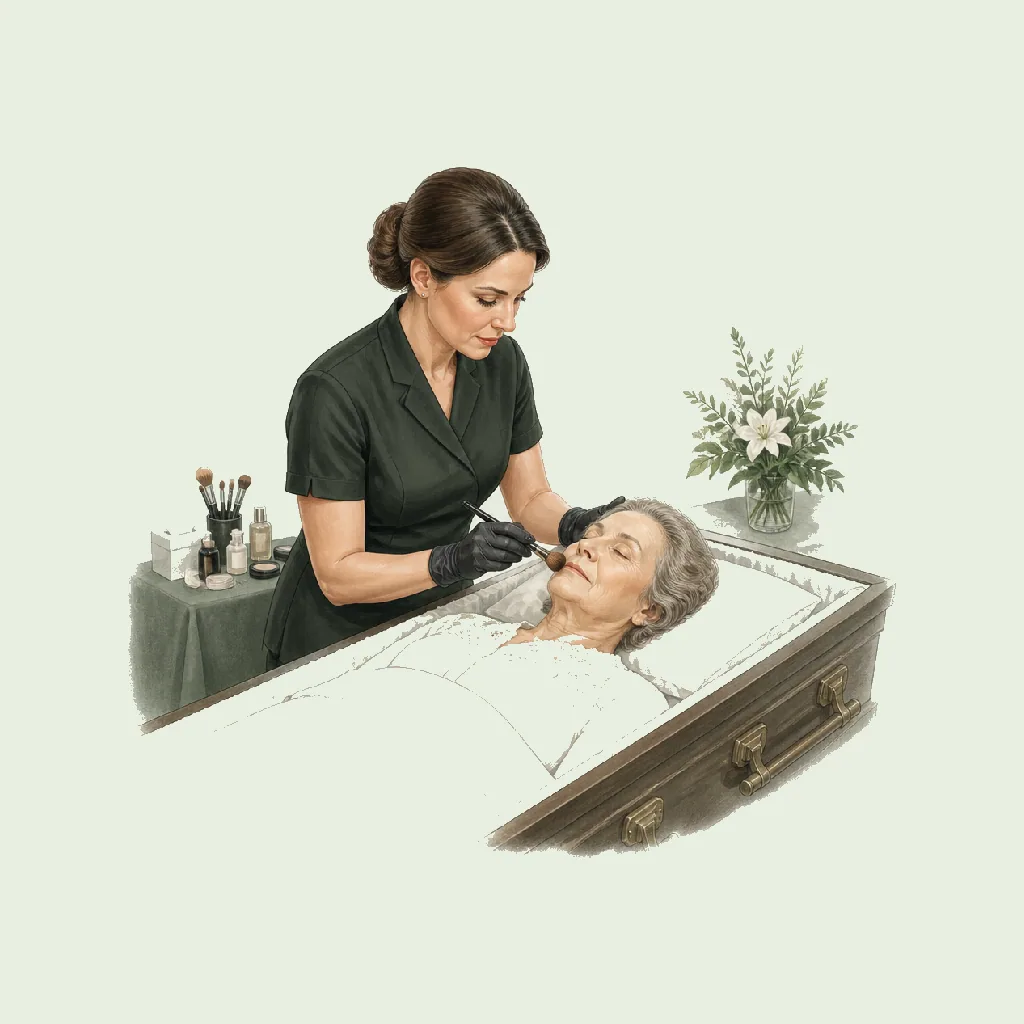
A Funeral Cosmetic Makeup Artist applies cosmetics and presentation techniques to support viewing or an open-coffin service. Terms should cover authorisation, family reference photographs, skin condition, product hygiene, colour selection, hair or nail requests, PPE, preparation-room access and documentation. The artist should work within cosmetic competence and refer restorative, embalming or clinical concerns rather than attempting invasive treatment or promising an exact recreation of appearance. Product selection should consider lighting in the chapel and changes that may occur between preparation and viewing. Brushes, palettes and disposable applicators must remain separated by case, with opened products inspected rather than automatically returned to general stock after use. Jewellery placement should match the documented family instruction before final presentation.
Responsibilities reflected in the contract
- Review authorised appearance instructions.
- Prepare products tools and workspace.
- Apply suitable cosmetic presentation.
- Protect dignity and identification controls.
- Record products limitations and completion.
A realistic working scenario
A requested finish cannot be achieved without restorative treatment, so the artist explains the limitation internally and seeks the authorised specialist response.
Outputs to agree
- respectful natural presentation
- hygienic controlled cosmetic practice
- clear records of products and wishes
Records and evidence
- Identity authorisation and reference.
- Product batch allergy or sensitivity note.
- Technique colour and completion check.
- Limitation damage incident and handover.
- Design files.
- Project briefs.
Reporting relationship
Typically reports to Creative Director, Design Lead, Account Director or Project Manager. Confirm the employer's actual reporting structure in the builder.
Authority and escalation
- The artist cannot carry out invasive restoration, disregard identity checks, use unapproved products, photograph without authority or guarantee an appearance outcome.
- Obtain approval before committing expenditure, changing contractual commitments or making regulated or staffing decisions outside the assigned role.
Tools and systems
- Design software.
- Project management tools.
- Approval systems.
- Client communication tools.
Workplace context
- Office, studio, remote systems, client meetings or approved project locations.
Contract priorities
- authorisation wishes and photographs
- products hygiene PPE and workspace
- cosmetics hair nails and limitations
- identity dignity records and handover
Information the employer should prepare
- the cosmetic and presentation scope
- the product and infection-control requirements
- the family-wish approval route
- the photography and record policy
- the embalmer mortuary and manager contacts
Individually written and reviewed against the maintained role record.



 £19.99 one-off contractPreview before payment, then download the branded PDF and send for signature.

 Employment Contract
 Employee Handbook
 Contract + Handbook Bundle
 HR Actions
 HR Actions Unlimited
 Compliance Membership