Day-to-day operating brief
What Forklift Driver work looks like in practice
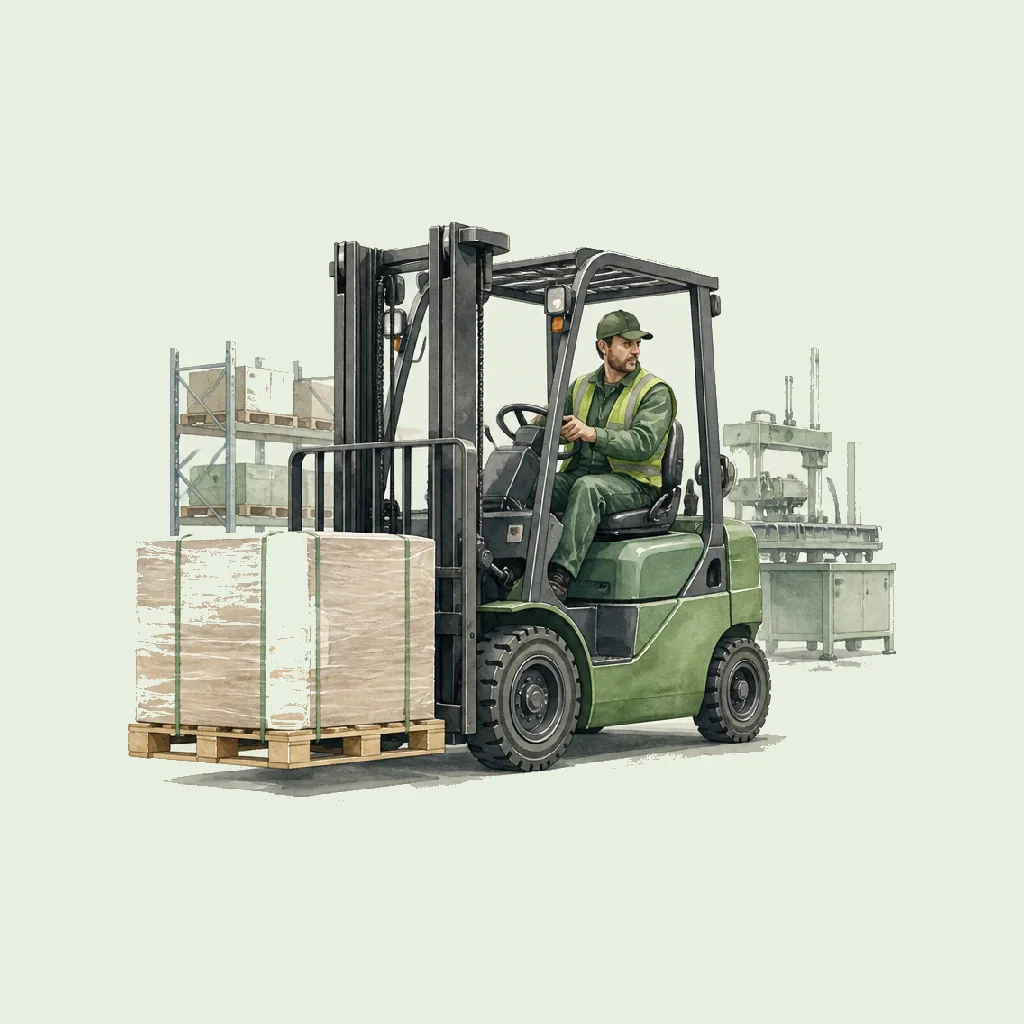
A Manufacturing Forklift Driver moves raw materials, work in progress, tooling and finished goods between stores and production. The contract should specify truck classes, attachments, line-side routes, racking, status labels, quarantine areas, pre-use checks, charging, pedestrian separation and scanning. The driver must protect material identity and cannot treat an urgent line shortage as authority to speed, overload or move held stock. Factory forklift work often intersects with pedestrian production areas and narrow line-side spaces. The driver should follow agreed call-off points, horn or crossing rules and staging limits so emergency routes and machine access remain clear. Contract terms may distinguish outdoor unloading, coil or drum attachments and movement of dies or tooling, each requiring separate competence. Materials should be placed by verified part, batch and status, since a physically correct pallet in the wrong line location can create a serious traceability failure. Battery charging or fuel exchange should occur only in designated areas with the truck secured, connectors inspected and damage reported before the vehicle is returned to a shared fleet.
Individually written and reviewed against the maintained role record.



 £19.99 one-off contractPreview before payment, then download the branded PDF and send for signature.
 Employment Contract
 Employee Handbook
 Contract + Handbook Bundle
 HR Actions
 HR Actions Unlimited
 Compliance Membership