Day-to-day operating brief
What Toolmaker work looks like in practice
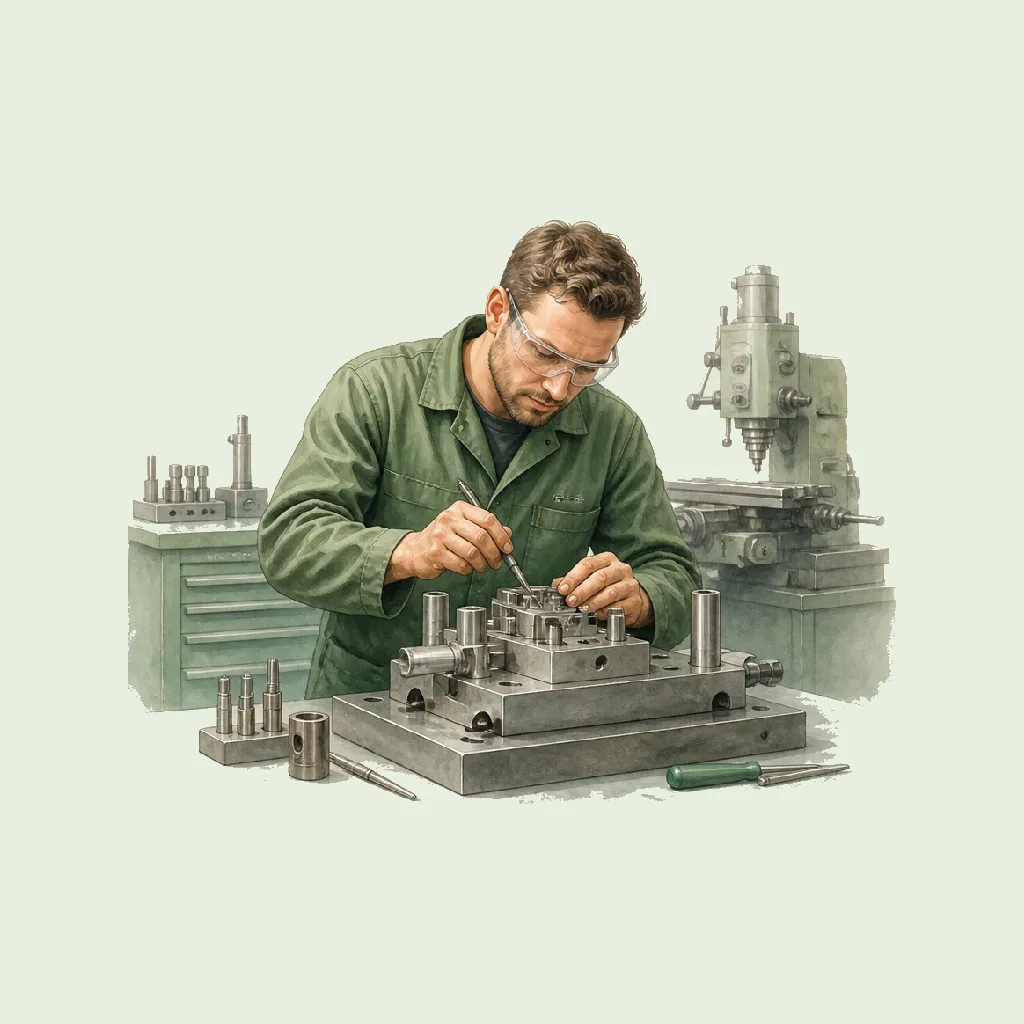
A Toolmaker manufactures, modifies and repairs dies, mould tools, jigs and fixtures using precision machining and bench fitting. Terms should identify tool types, drawings, tolerances, machines, heat-treatment or specialist interfaces, try-outs, tool history, spares and breakdown support. The employee should not make undocumented modifications or return tooling with unresolved damage simply to restore production. Tool condition can influence thousands of parts, making controlled diagnosis more valuable than a quick undocumented repair. The toolmaker may inspect wear, alignment, clearances, cooling or ejection features and compare findings with the tool history. Terms should cover lifting heavy sections, sharp edges, stored energy, grinding dust and safe trial support. Spare inserts and modified components need identification to the correct tool revision, while customer-owned tools should be segregated and maintained under the agreed custody rules.
Individually written and reviewed against the maintained role record.



 £19.99 one-off contractPreview before payment, then download the branded PDF and send for signature.
 Employment Contract
 Employee Handbook
 Contract + Handbook Bundle
 HR Actions
 HR Actions Unlimited
 Compliance Membership