Day-to-day operating brief
What Industrial Heritage Officer (Machinery) work looks like in practice
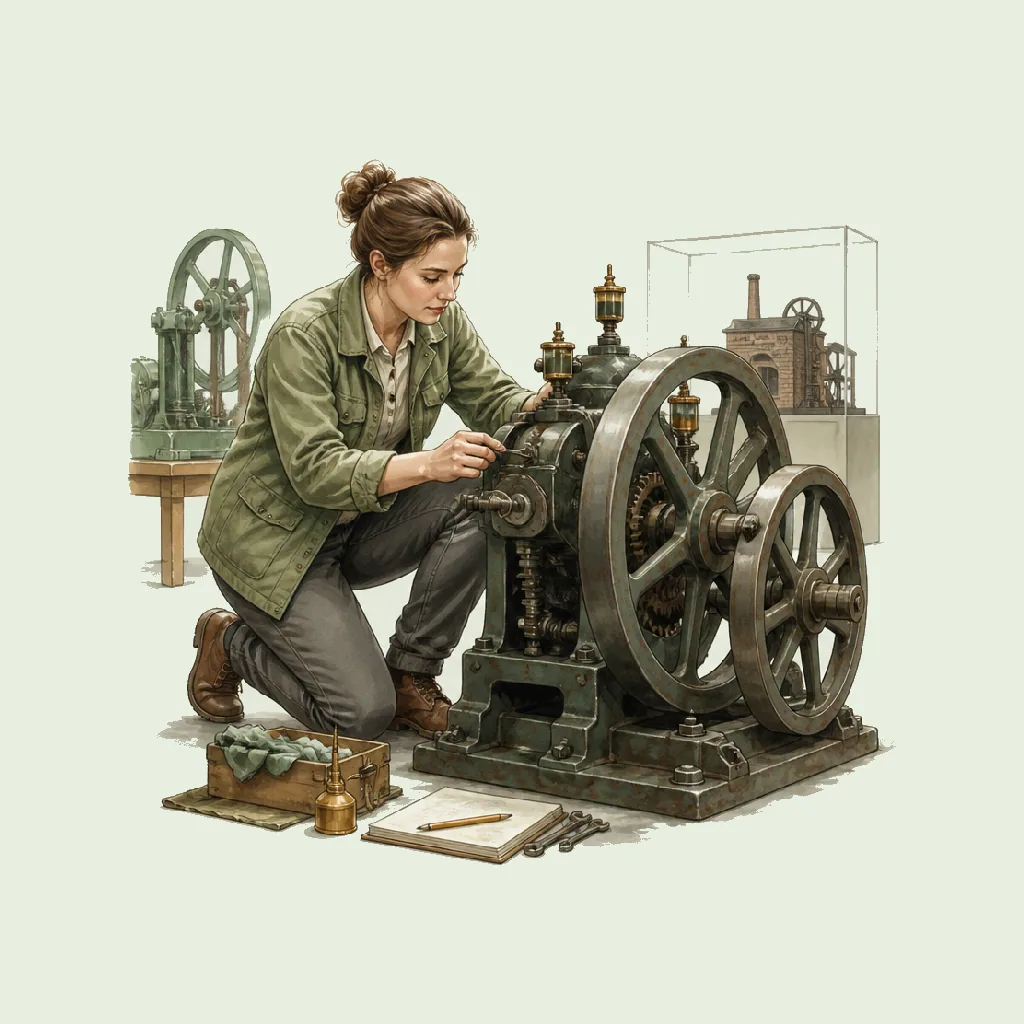
An Industrial Heritage Officer cares for historic engines, tools and machinery that may be static, conserved or demonstrated in operation. Terms should cover condition, isolation, guarding, fuels, pressure, lubricants, maintenance, competent operators, volunteers, demonstrations, spares and documentation. The officer should not run machinery because it once worked, replace historic components without records or let public engagement override current safety assessment. Operating logs should record warm-up, lubrication, guards, emergency stops and abnormal noise before public admission. A machine restored to movement is not automatically suitable for historic load or production speed; demonstration limits should be derived from its present condition, replacement parts and controlled purpose. Before access, records should identify stored energy, unstable guards, contaminated residues and parts that must not be moved. Interpretation can explain how machinery operated without inviting visitors or untrained staff to recreate hazardous procedures.
Individually written and reviewed against the maintained role record.



 £19.99 one-off contractPreview before payment, then download the branded PDF and send for signature.
 Employment Contract
 Employee Handbook
 Contract + Handbook Bundle
 HR Actions
 HR Actions Unlimited
 Compliance Membership