Day-to-day operating brief
What Mining Museum Curator (Safety lamps) work looks like in practice
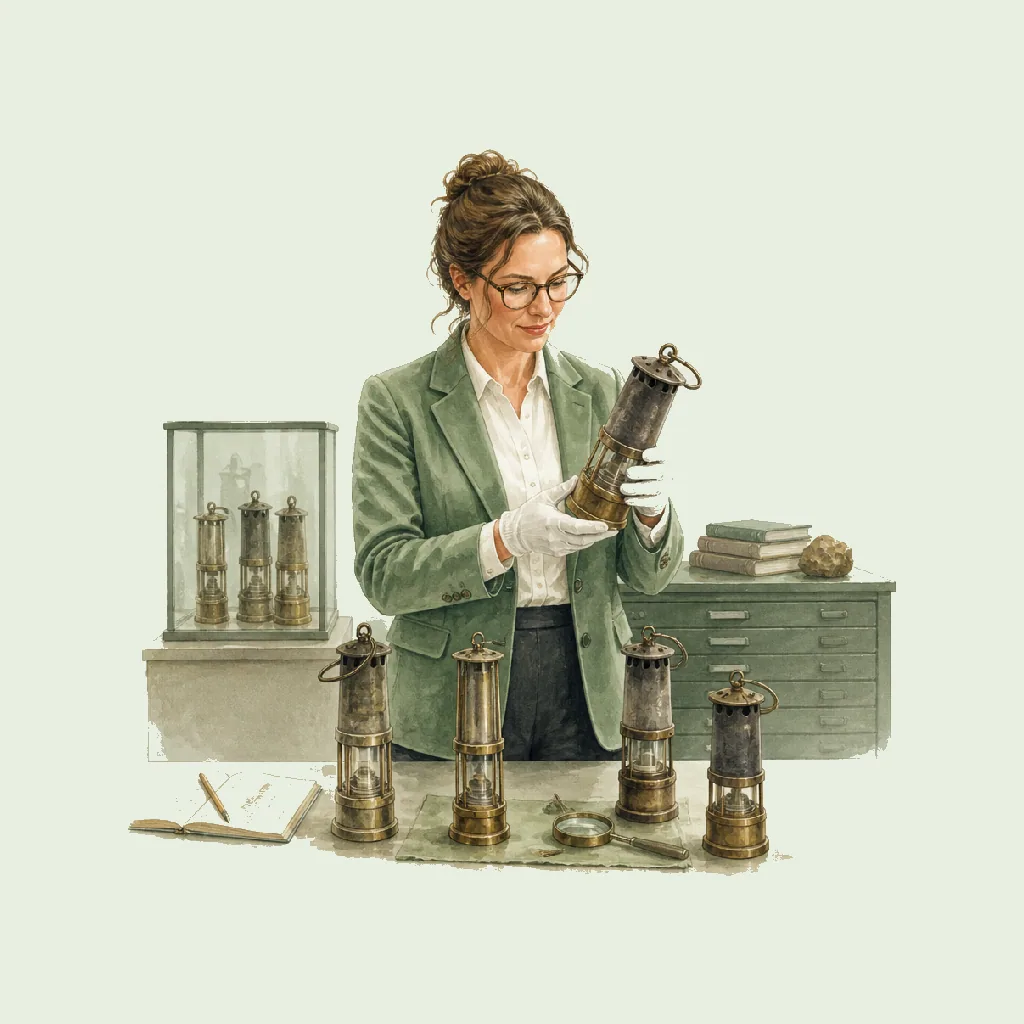
A Mining Museum Curator manages safety lamps, tools, machinery, minerals, personal material and community histories. Terms should cover lamp types and makers, colliery provenance, fuels, asbestos or contamination, working machinery, oral histories, storage, research, demonstrations and exhibitions. The curator should not light historic lamps without an approved demonstration plan, clean away evidential deposits or romanticise hazardous working conditions without balanced evidence. Lamp documentation should record maker, type, fuel system, gauze, colliery association and later modification. Community testimony can explain working practice but should remain linked to speaker, date and consent, allowing the museum to distinguish personal experience from a universal statement about every mine or period. Lamp interpretation should distinguish manufacturer, fuel, locking mechanism and intended mining context, since visually similar examples can embody different safety principles. Demonstrations should use surrogates or approved procedures rather than operating accessioned objects casually.
Individually written and reviewed against the maintained role record.



 £19.99 one-off contractPreview before payment, then download the branded PDF and send for signature.
 Employment Contract
 Employee Handbook
 Contract + Handbook Bundle
 HR Actions
 HR Actions Unlimited
 Compliance Membership