Day-to-day operating brief
What Maritime Curator (Ship models) work looks like in practice
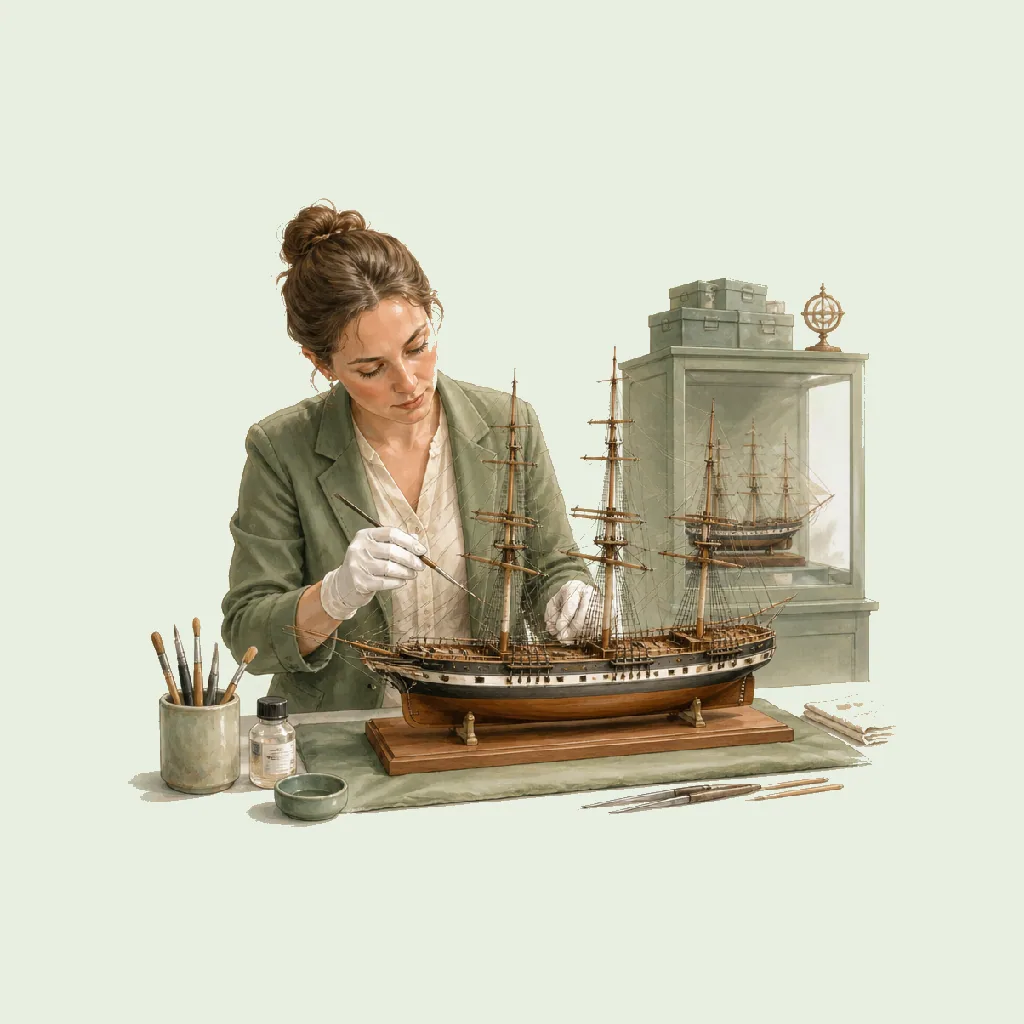
A Maritime Curator manages ship models, navigation instruments, plans, uniforms and maritime social-history collections. Terms should cover vessel names and versions, makers, scales, rigging, materials, provenance, storage, research, loans, conservation and exhibitions. The curator should not re-rig a model from assumption, treat a model as a precise plan without evidence or overlook hazardous historic materials used in maritime objects. Model records should distinguish the vessel represented, the model's maker and the purpose for which it was built. Transport cradles must support hull and superstructure without loading delicate masts or rigging, while any detached component should receive an identifier before leaving the display or store. Rigging, removable fittings and old restoration materials can make handling deceptively complex. Movement plans should record lifting points, cradle requirements and the sequence for detaching components before a model leaves its usual display case. Display labels should distinguish the vessel represented, the model's own making history and any later modifications to the miniature object.
Individually written and reviewed against the maintained role record.



 £19.99 one-off contractPreview before payment, then download the branded PDF and send for signature.
 Employment Contract
 Employee Handbook
 Contract + Handbook Bundle
 HR Actions
 HR Actions Unlimited
 Compliance Membership