Day-to-day operating brief
What Photographer (Collections digitisation) work looks like in practice
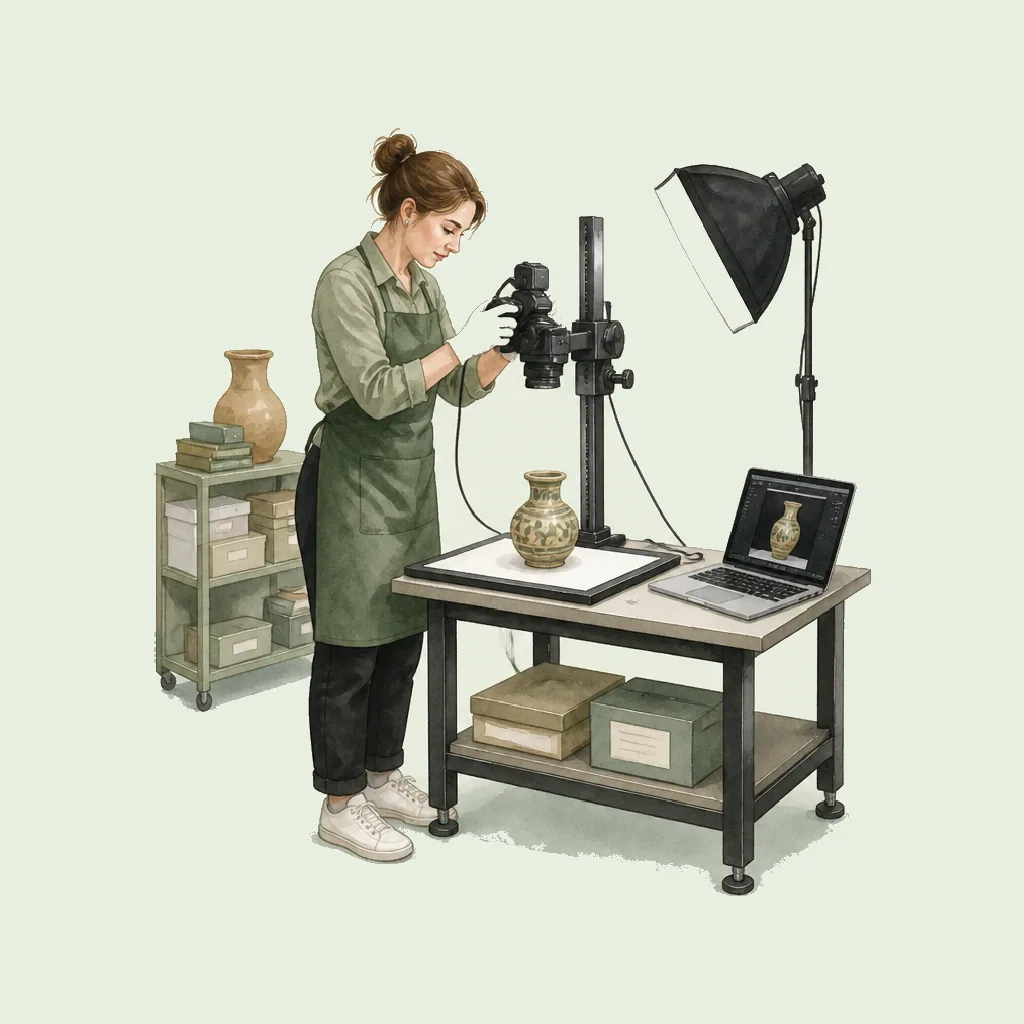
A Collections Photographer creates documentary, publication and digitisation images of museum objects. Terms should cover handling, studio set-up, supports, lighting limits, colour targets, scales, focus, file naming, metadata, masters, derivatives, rights, embargoes and equipment. The photographer should not move objects without authorised handling, over-light sensitive material or edit documentary masters to remove damage, labels or features that are part of the record. Capture lists should identify required views, scales, colour targets and any detail requested for condition or research. File ingest must verify count, naming, colour profile and checksums before camera cards are cleared, preventing a busy studio from losing the only image of an unpacked loan object. Reflective surfaces, glazed works and relief objects may require polarisation, controlled raking light or multiple exposures. Any compositing or colour correction should be documented so the preservation master remains distinguishable from a presentation derivative.
Responsibilities reflected in the contract
- Prepare calibrated capture equipment.
- Photograph objects to specification.
- Coordinate handling and supports.
- Process name and store files.
- Attach metadata rights and quality results.
A realistic working scenario
A reflective object cannot be captured with the planned rig without unsafe repositioning, so the photographer revises lighting rather than asking for unsupported balancing.
Outputs to agree
- faithful high-quality collection images
- safe controlled studio sessions
- complete image and rights metadata
Records and evidence
- Object identifier condition and handler.
- Camera lens light target and settings.
- File name profile checksum and master.
- Right restriction quality and approval.
- Design files.
- Project briefs.
Reporting relationship
Typically reports to Creative Director, Design Lead, Account Director or Project Manager. Confirm the employer's actual reporting structure in the builder.
Authority and escalation
- The photographer cannot handle objects alone, conceal documentary features, exceed light limits, overwrite masters, publish embargoed images or use files personally.
- Obtain approval before committing expenditure, changing contractual commitments or making regulated or staffing decisions outside the assigned role.
Tools and systems
- Design software.
- Project management tools.
- Approval systems.
- Client communication tools.
Workplace context
- Office, studio, remote systems, client meetings or approved project locations.
Contract priorities
- projects objects studios and targets
- handling supports lighting and calibration
- files masters derivatives and storage
- metadata rights quality and security
Information the employer should prepare
- the collection formats and image products
- the studio equipment and capture standards
- the handling and light controls
- the file rights and storage workflow
- the imaging lead conservator and systems contacts
Individually written and reviewed against the maintained role record.



 £19.99 one-off contractPreview before payment, then download the branded PDF and send for signature.
 Employment Contract
 Employee Handbook
 Contract + Handbook Bundle
 HR Actions
 HR Actions Unlimited
 Compliance Membership