Day-to-day operating brief
What Forklift Driver work looks like in practice
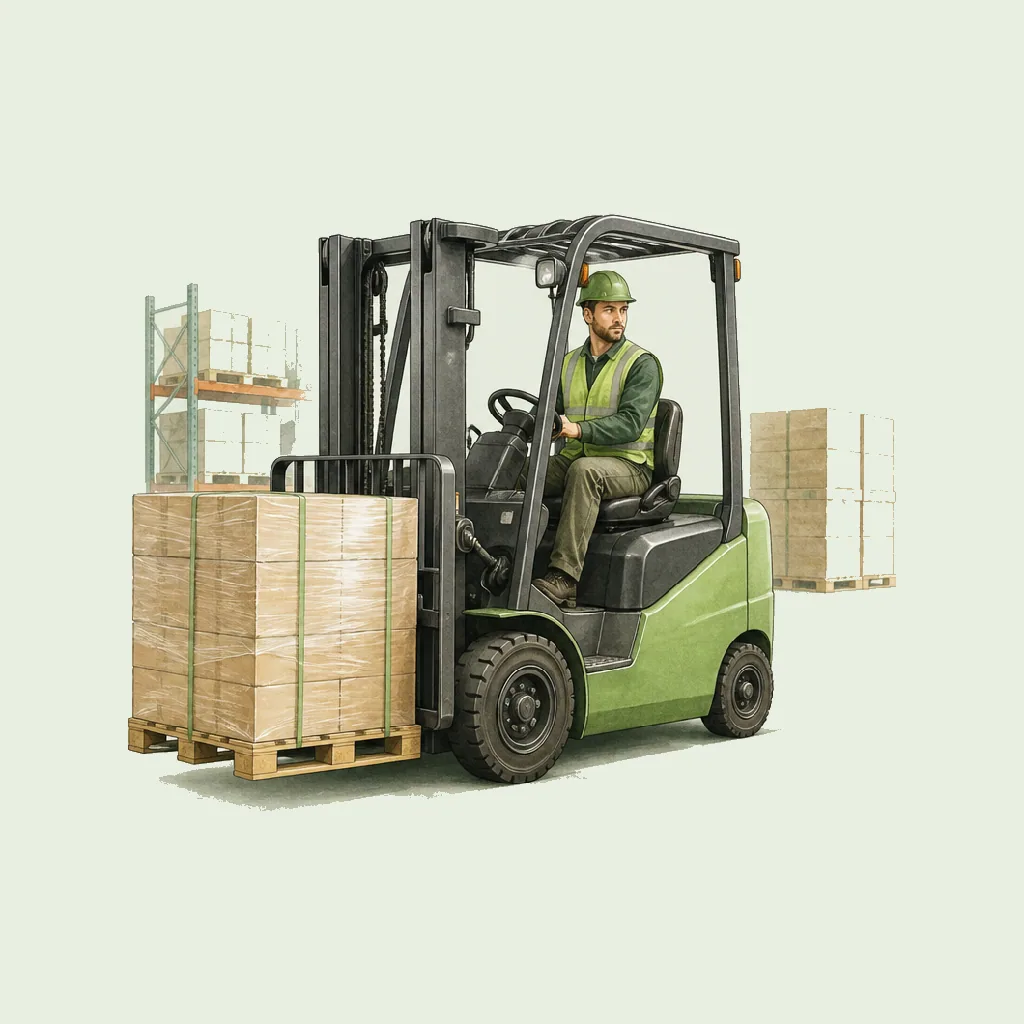
A Forklift Driver in transport and storage moves pallets between trailers, yards, bulk areas and warehouse racking. The agreement should name authorised truck categories, site zones, shift pattern, pre-use checks, battery or fuel procedures, load plates, dock levellers, trailer restraint, pedestrian segregation, damaged pallets, scanning and incident reporting. A general driving licence does not establish lift-truck competence, and productivity measures must not encourage speeding, unsafe stacking or movement where visibility, racking or vehicle stability is compromised. Trailer loading creates additional hazards beyond ordinary warehouse travel, including dock edges, uneven floors, suspended tail lifts and movement by a tractor unit. The driver should know the bay-light or key-control signal, maximum floor load and who confirms a vehicle is safe to enter. Terms may also distinguish bulk stacking, block storage and selective racking, alongside attachment changes and work in chilled or external areas. Shift handover should identify outstanding defects, charging status, isolated aisles and any pallet whose stability or documentation remains uncertain.
Individually written and reviewed against the maintained role record.



 £19.99 one-off contractPreview before payment, then download the branded PDF and send for signature.
 Employment Contract
 Employee Handbook
 Contract + Handbook Bundle
 HR Actions
 HR Actions Unlimited
 Compliance Membership