Day-to-day operating brief
What Forklift Operator (Counterbalance) work looks like in practice
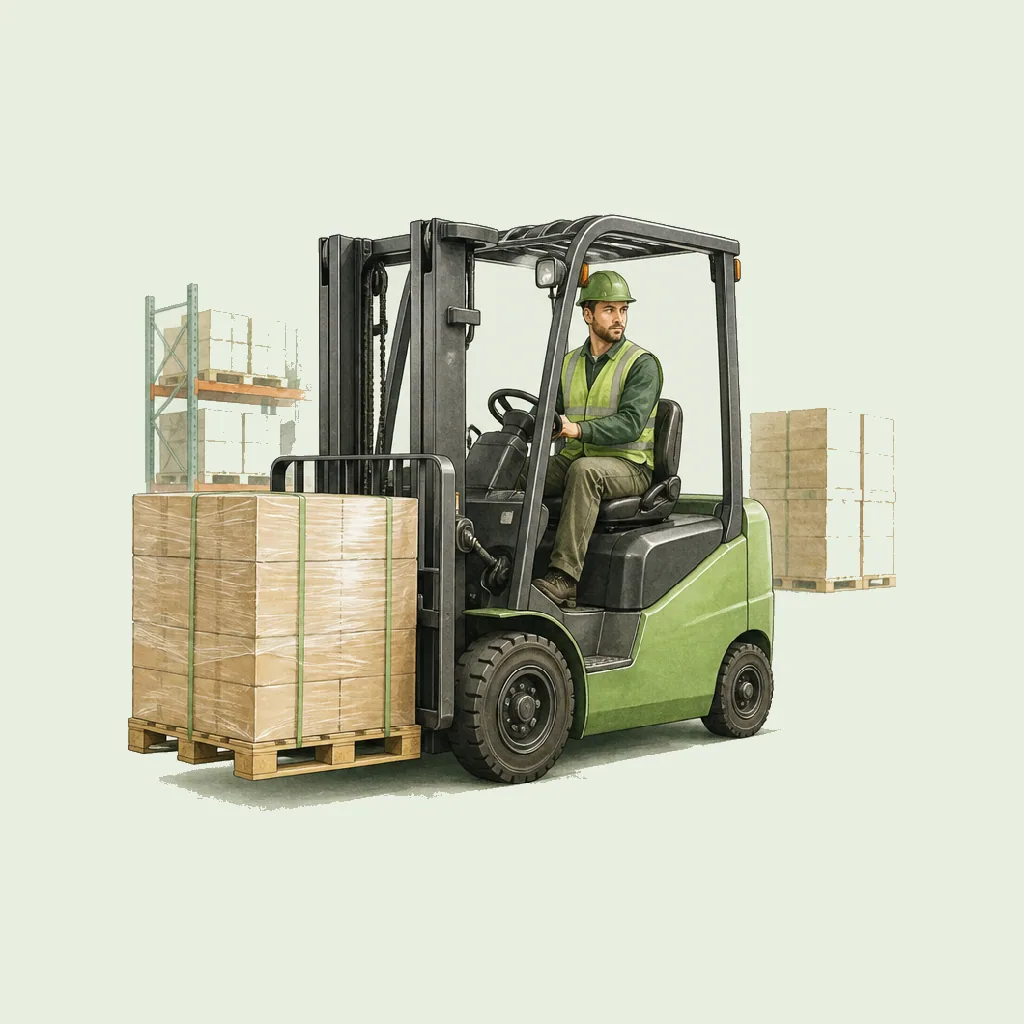
A Counterbalance Forklift Operator moves palletised or unit loads at ground level, into vehicles and in external yards. Terms should name truck capacity, fuel or battery type, attachments, ramps, trailers, floor condition, visibility, weather, load centres and pedestrian routes. Counterbalance authorisation does not automatically cover reach, telehandler or specialist attachments. Counterbalance stability changes with lift height, turning, gradient and load centre, so the operator should keep forks low during travel and select a route that avoids sudden changes. Yard work may introduce potholes, trailers, rain and reversing HGVs not present indoors. Contract terms should cover refuelling or battery exchange, fork and attachment condition, overnight parking and key custody. A load that blocks forward vision needs an approved reverse-travel or banksman arrangement instead of guesswork. When working around articulated trailers, the operator should confirm dock plate capacity and trailer support where applicable before adding truck and load weight to the floor.
Individually written and reviewed against the maintained role record.



 £19.99 one-off contractPreview before payment, then download the branded PDF and send for signature.
 Employment Contract
 Employee Handbook
 Contract + Handbook Bundle
 HR Actions
 HR Actions Unlimited
 Compliance Membership