Day-to-day operating brief
What Power Tool Hire (Generator) work looks like in practice
A power-tool hire assistant controls the safe issue and return of drills, saws, breakers, generators and related accessories. The role requires accurate identification, condition checks, customer handover and authority limits for deposits, damage and equipment that must be quarantined. Suitability depends on the planned material, environment, power source and user capability, not simply whether an item is available. Staff should identify when specialist installation, ventilation, earthing or operator competence falls outside a normal counter handover.
Responsibilities reflected in the contract
- Prepare tools and generators for hire.
- Inspect test and record equipment condition.
- Explain approved operation and return requirements.
- Manage accessories fuel and consumables.
- Quarantine defects and coordinate maintenance.
A realistic working scenario
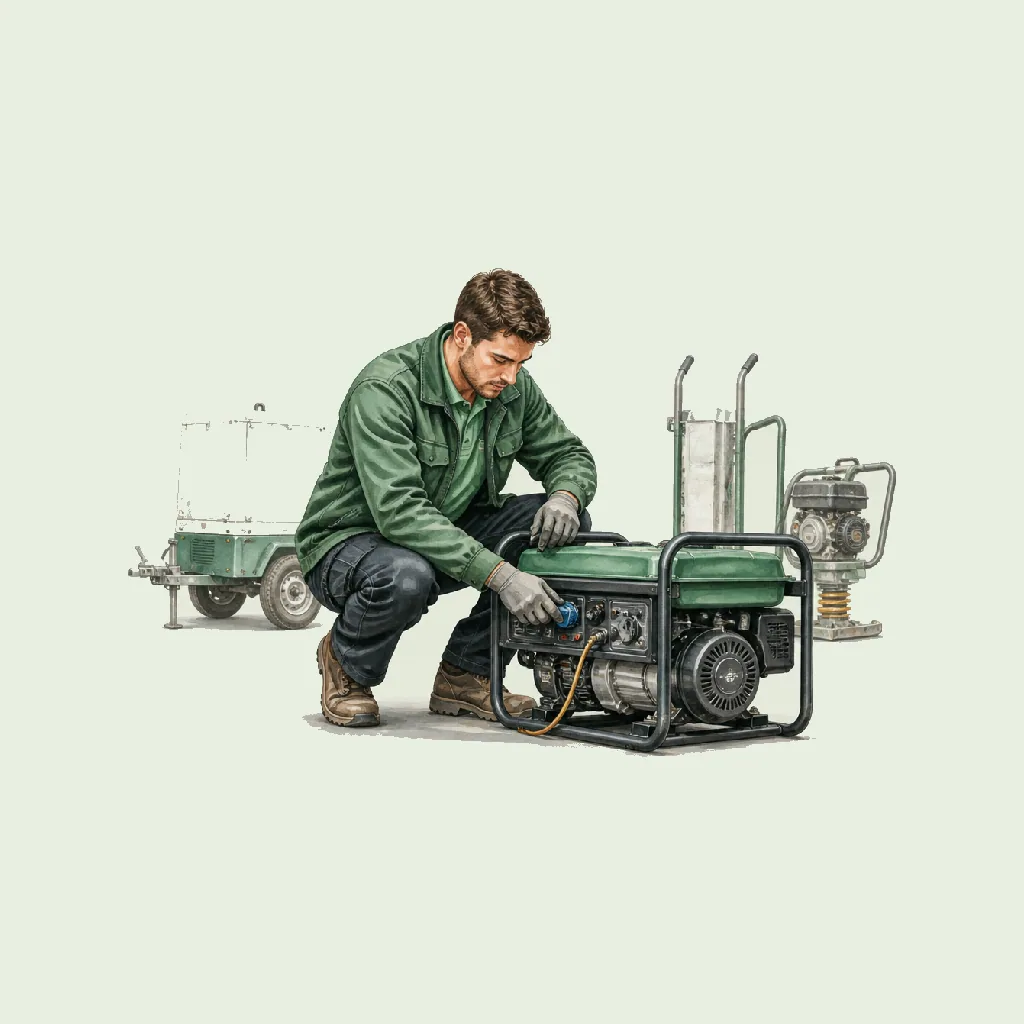
A generator returns with a fuel leak and a missing cable. The assistant records the condition before cleaning, isolates the unit from available stock, updates the hire system and refers repair, damage charging and any replacement commitment to the hire manager.
Outputs to agree
- correct equipment reservations and handovers
- documented issue and return inspections
- safe quarantine of damaged or incomplete hire assets
Records and evidence
- Hire agreement and customer handover.
- Asset number and condition photographs.
- Inspection, test and maintenance status.
- Deposit, damage and missing-item record.
- Work records.
- Handover notes.
Reporting relationship
Typically reports to Line Manager or Department Manager. Confirm the employer's actual reporting structure in the builder.
Authority and escalation
- The assistant may issue only equipment shown as available and within their training. Deposit exceptions, damage waivers, repair decisions and release after a failed check require the hire or workshop manager.
- Obtain approval before committing expenditure, changing contractual commitments or making regulated or staffing decisions outside the assigned role.
Tools and systems
Workplace context
- Office, client premises, remote systems or assigned work locations.
Training and certification
- Complete employer-required health and safety training.
Contract priorities
- equipment identification and custody
- customer instruction and competence boundaries
- fuel, electrical and manual-handling risks
- deposit and damage authority
Information the employer should prepare
- the tool classes depot and customer groups
- the electrical engine and lifting competence
- the test inspection and maintenance schedule
- the deposit damage and replacement authority
- the fuel delivery and incident procedures
Individually written and reviewed against the maintained role record.



 £19.99 one-off contractPreview before payment, then download the branded PDF and send for signature.
 Employment Contract
 Employee Handbook
 Contract + Handbook Bundle
 HR Actions
 HR Actions Unlimited
 Compliance Membership