Day-to-day operating brief
What Crane Operator work looks like in practice
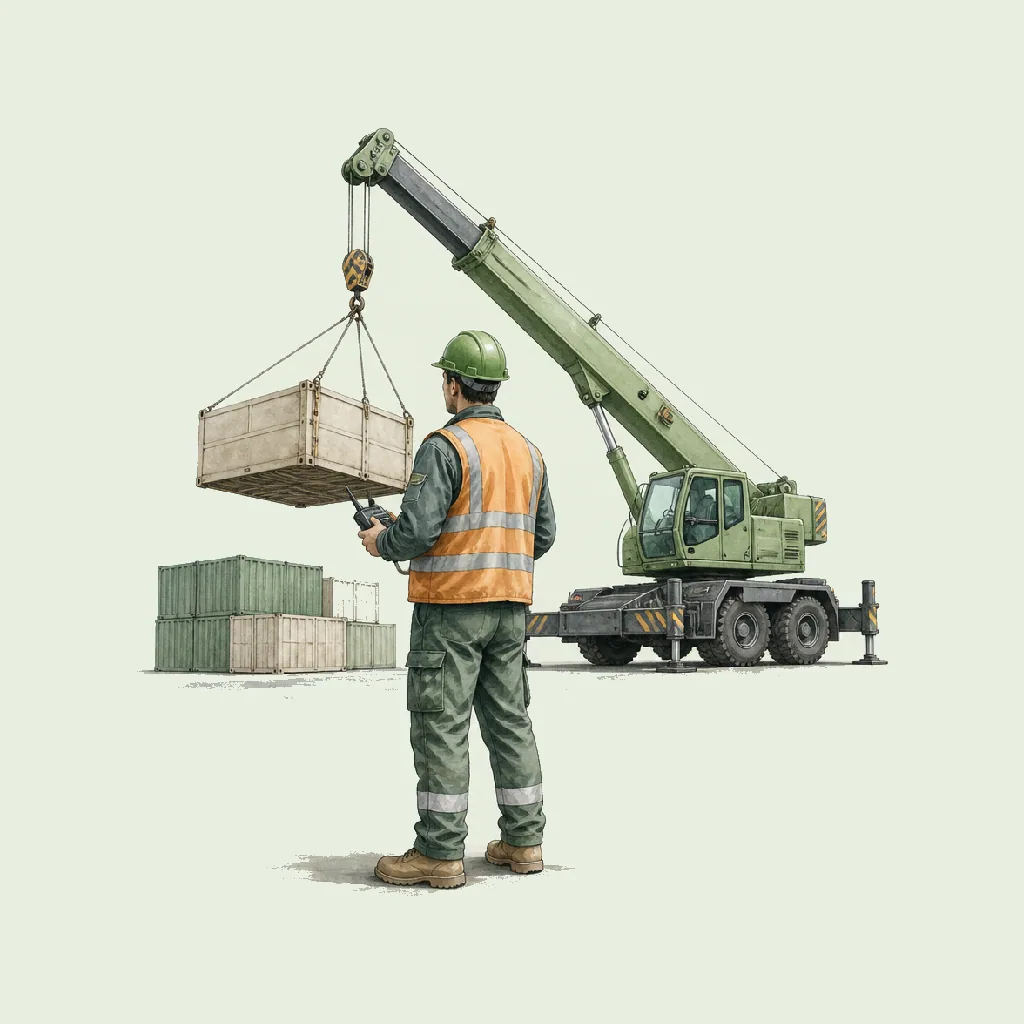
A Crane Operator controls fixed, mobile or overhead lifting equipment within their competence and the approved lift arrangement. Terms should name crane types, certification, pre-use checks, load charts, accessories, plans, signallers, exclusion zones, weather, ground or runway conditions and defect response. The operator must retain authority to stop when the load, signal or setup is unclear. The operator should compare the machine configuration with the lift plan, including boom, counterweight, radius and any derating caused by ground or weather. Daily checks and limit devices support but do not replace judgement. Terms can cover travelling with loads, tandem-lift exclusions, blind lifts and loss of radio communication. When a load snags or behaves unexpectedly, the correct response is to stop and stabilise, not apply additional force beyond the plan. Shift transfer should identify current reeving, configuration, outstanding alarms and accessories left attached, ensuring the next operator does not assume the crane remains in its standard setup. Operator logbooks should record unusual noises, limit activations and temporary restrictions even where the lift completed.
Individually written and reviewed against the maintained role record.



 £19.99 one-off contractPreview before payment, then download the branded PDF and send for signature.
 Employment Contract
 Employee Handbook
 Contract + Handbook Bundle
 HR Actions
 HR Actions Unlimited
 Compliance Membership