Day-to-day operating brief
What Makeup Artist work looks like in practice
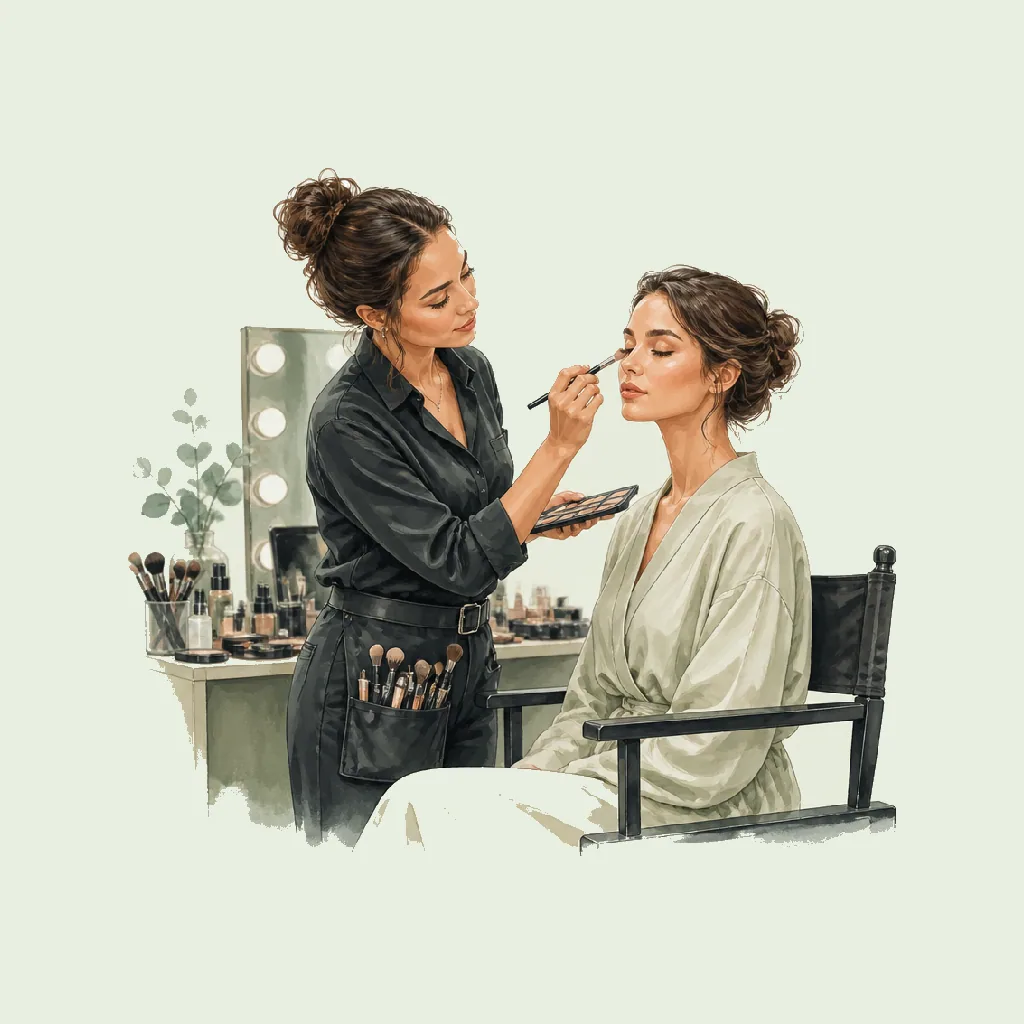
A Performance Makeup Artist designs, applies and maintains makeup for film, television, theatre, photography or live productions. Work may include character, beauty, ageing, effects or prosthetic elements, each with different product and competence demands. Terms should identify productions and designs, fittings and tests, allergies, performer consent and dignity, hygiene, kit and consumables, continuity photography, early calls, location or touring work, effects boundaries, assistants, product records, confidentiality and handover or removal procedures.
Responsibilities reflected in the contract
- Prepare and apply approved makeup designs.
- Conduct consultations tests and product checks.
- Maintain hygiene labelled kit and clean tools.
- Support continuity changes removal and repairs.
- Record products reactions photographs and handovers.
A realistic working scenario
A performer develops irritation beneath an appliance during a take. The artist stops the application, supports safe removal and records the product and response rather than masking the reaction for continuity.
Outputs to agree
- approved camera or stage-ready makeup
- hygienic controlled products and kit
- accurate continuity and reaction records
Records and evidence
- Performer design test and consent.
- Product batch application and reaction.
- Kit hygiene tool and stock.
- Continuity image call and removal handover.
- Design files.
- Project briefs.
Reporting relationship
Typically reports to Creative Director, Design Lead, Account Director or Project Manager. Confirm the employer's actual reporting structure in the builder.
Authority and escalation
- The artist cannot use unapproved products, work beyond effects competence, ignore reactions, publish performer images or impose unagreed appearance changes.
- Obtain approval before committing expenditure, changing contractual commitments or making regulated or staffing decisions outside the assigned role.
Tools and systems
- Design software.
- Project management tools.
- Approval systems.
- Client communication tools.
Workplace context
- Office, studio, remote systems, client meetings or approved project locations.
Contract priorities
- productions designs calls and locations
- performers tests consent and allergies
- products hygiene kit prosthetics and effects
- continuity images assistants and handover
Information the employer should prepare
- the productions cast and design scope
- the fitting call and location schedule
- the allergy test and consent procedures
- the kit product and effects boundaries
- the continuity image and handover rules
Individually written and reviewed against the maintained role record.



 £19.99 one-off contractPreview before payment, then download the branded PDF and send for signature.
 Employment Contract
 Employee Handbook
 Contract + Handbook Bundle
 HR Actions
 HR Actions Unlimited
 Compliance Membership